Roof Area → Materials
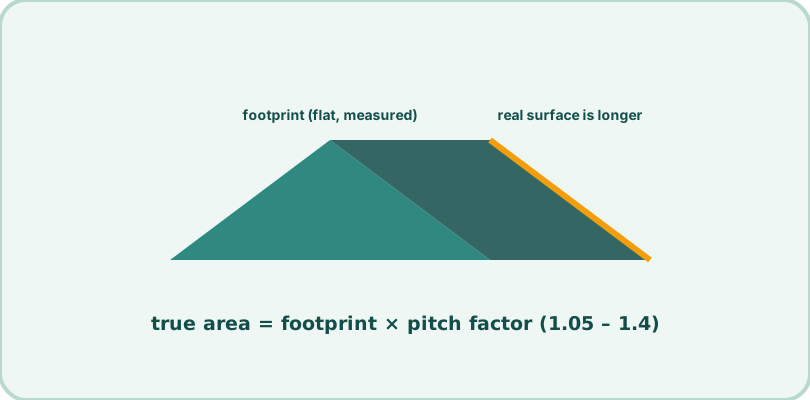
Roofing materials are quoted in squares (100 sq ft each). The path from a map to a materials list is three steps: footprint → pitch factor → surface, with a waste allowance on top.
Step 1 — measure the footprint
Draw the roof outline (the building's edge, not the overhang — or include a 30-50 cm overhang deliberately, consistently) in the map tool. Satellite imagery is genuinely good here: the roof edge is usually the clearest line on the map. Aerial view means you are measuring the flat projection — that is correct; slope comes next.
Step 2 — apply the pitch factor
| Pitch | Walk feel | Factor |
|---|---|---|
| 3:12 | Walkable, barely noticeable | ×1.05 |
| 6:12 | Walkable with care | ×1.19 |
| 10:12 | Ropes or scaffolding | ×1.35 |
Pitch is written as rise per 12 (a "6:12" roof rises 6 units per 12 of run). The conversion factor to true surface: 3:12 → ×1.05, 6:12 → ×1.19, 10:12 → ×1.35. Not sure of your pitch? Hold a level against the rafter line in the attic or gable edge and measure the rise over 12 inches — or use the visual: a roof you can walk without ropes is low; one that needs scaffolding is steep.
Step 3 — the calculator
Waste, honestly stated
Simple gable roofs cut close: add 10%. Hips, valleys, dormers and skylights multiply the cuts: 15%. Contractors who quote a "square count" from the same math are not padding — bundles are the unit of purchase, and running short mid-roof is the expensive outcome. For solar quotes, this same true-surface number is what installers want first.
When not to trust the map
Fresh renovations (new footprint not yet in imagery), heavy tree cover, and multi-level roofs with overlapping planes all deserve a physical verification pass — tape-measure the gable length and rafter length, multiply, and compare with the map number before ordering thousands of dollars of material. When the two disagree by more than a few percent, walk the eaves with a measuring wheel — fifteen minutes that protects a five-figure invoice. And when you finally stand in a contractor's kitchen comparing quotes, start by asking how many squares they measured — then tell them yours. The number you drew for free is the one that keeps the conversation honest.
Frequently asked questions
Why is the real roof area bigger than the footprint?
Roofs slope. A steeper roof has more actual surface for the same ground footprint; the pitch factor (1.05 for low, 1.19 for medium, 1.35 for steep) converts between them.
What is a "square" in roofing?
One roofing square is 100 square feet (9.29 m²) — the industry unit for quoting and material coverage. Asphalt shingles come in bundles, three per square.
Can I measure the footprint of an L-shaped roof?
Yes — draw the outline in the map tool as one polygon; it handles any shape. Complex roofs with valleys and dormers add waste: pros quote 10-15% over the calculated surface.